Why I Tell Every Portland Homeowner: Hire a Certified Roofing Contractor, No Exceptions

Updated: Jul 22
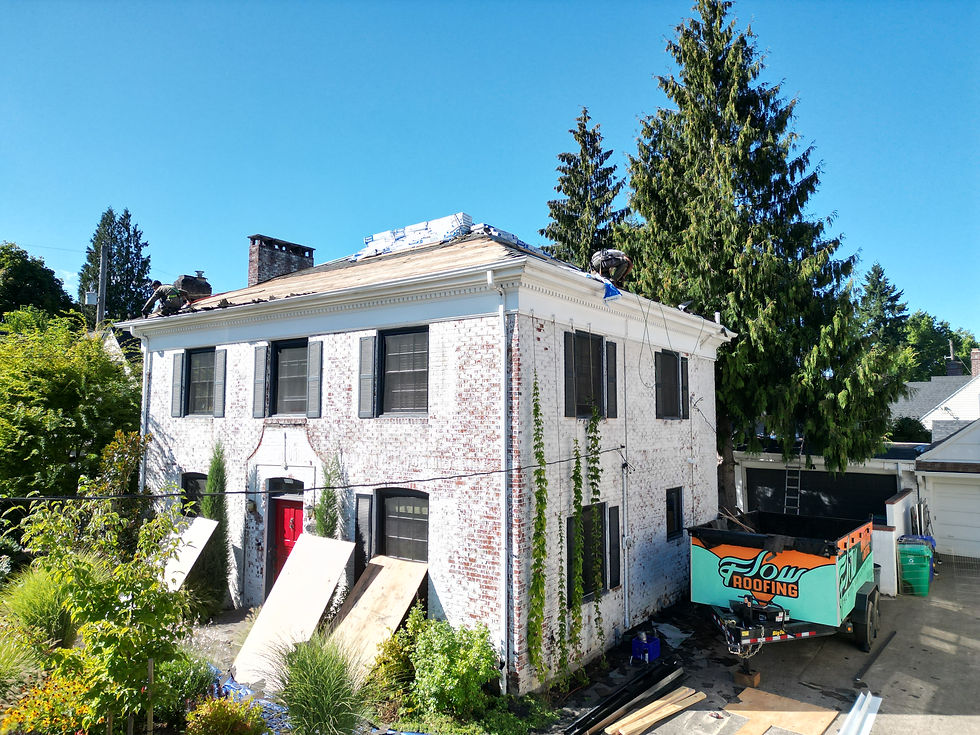
I've walked more roofs in the Portland metro than I can count at this point — steep-slope shingle roofs on homes in the West Hills, roofs battered by moss and moisture out toward the coast, roofs where a homeowner called me in a panic because water was coming through a bedroom ceiling. And if there's one thing I wish every homeowner understood before they hire someone to fix or replace their roof, it's this: certification isn't a nice-to-have. It's the difference between a roof that protects your family and your home for 25 years and one that fails in five.
I'm not saying this as a sales pitch. I'm saying it because I've seen what happens on both sides of that line, and it's usually the homeowner who pays for the difference.
What "Certified Roofing Contractor" Actually Means
A lot of homeowners hear "certified roofing contractor" and assume it just means licensed and insured. That's part of it, but it's not the whole picture. In Oregon, any roofing contractor needs a CCB (Construction Contractors Board) license, and you should always check that before signing anything — it's the baseline, not the finish line.
Manufacturer certification is the layer most homeowners never think to ask about. Companies like Malarkey, GAF, and Duro-Last don't hand out their best warranties to just anyone. To install a roofing system under an enhanced, manufacturer-backed warranty, a contractor has to go through training, prove their crews install correctly, and maintain that standard over time. That's what lets me tell a homeowner their new roof is backed by a 30-year material warranty and a workmanship warranty the manufacturer itself stands behind — not just a promise from the contractor who happened to show up.
If your roofer isn't certified with the manufacturer of the shingles or system going on your house, that enhanced warranty either doesn't exist or won't hold up if you ever need it.
Portland's Weather Doesn't Forgive Shortcuts
I tell homeowners this all the time: our climate is uniquely hard on roofs. We get months of steady, patient rain — not the dramatic kind that tests a roof once and moves on, but the kind that quietly works at every seam, every flashing detail, every nail for weeks at a stretch. Add in moss growth, wind-driven rain, and the occasional hard freeze, and you've got a climate that will find every mistake a contractor makes and turn it into a leak, usually a year or two after the crew has already left.
A certified contractor knows the details that matter here — how to flash around a chimney or skylight so water can't work its way in, how to size attic ventilation so your roof deck doesn't quietly rot from the inside, how to detail valleys and eaves so ice and heavy rain don't back up under the shingles.
An uncertified crew might get 90% of your roof right. It's that last 10% — the stuff you can't see from your driveway — that decides whether your roof lasts its full 25 to 30 years or starts failing while you're still paying it off.
Your Roof Protects More Than Your House
For most people, a roof replacement is one of the biggest checks they'll ever write for their home — often more than a kitchen remodel, sometimes more than a car. But it's also protecting the things that matter most: your family sleeping underneath it, your belongings, your electrical system, your home's structure.
If that roof is installed by an uncertified contractor and something goes wrong — a warranty claim gets denied because the installation didn't meet manufacturer standards, or you discover hidden water damage two years after move-in — you're the one absorbing that cost, not the contractor who cut corners and moved on to the next job. I've had homeowners call me in tears because a "great deal" a few years back is now a five-figure repair bill, and the company that did the original work is nowhere to be found.
Certification is protection for you, the person who has to live under that roof for the next few decades.
What I Tell Homeowners to Ask
When someone asks me how to vet a roofing contractor, I tell them to ask these questions before they sign anything:
Are you certified by the manufacturer of the shingles or system you're proposing, and can you show me the documentation?
Is my workmanship warranty backed by you, or by the manufacturer directly?
Can I see photos or get references from real homes you've roofed recently — not just a website gallery?
Who is actually doing the installation, and are they the certified crew, or a subcontractor you hired last-minute?
A contractor who's genuinely certified will answer these questions without blinking, because they've got the paperwork and the track record to back it up. A contractor who gets vague, rushes you, or pressures you to sign same-day is telling you something important.
Why This Matters to Me
I've sat in living rooms with homeowners trying to figure out why the roof they paid for three years ago is already leaking into their kids' bedroom, and the honest answer is almost always the same: it was never installed to the standard the warranty required in the first place. That's a hard conversation to have after the fact. I'd much rather have the easier conversation up front — about certification, about why the properly certified bid isn't always the cheapest one, about what you're actually paying for when you hire the right crew.
Your roof is one of the biggest investments you'll make in your home, and in a climate like ours, it's not the place to save a little money by rolling the dice on an uncertified contractor. Certification is the paper trail that proves the job was done right, and it's what actually stands behind your warranty the day you need it.
That's why I bring it up with every homeowner I talk to.
Looking for a free inspection? Call 503-936-2465 or email info@flowroofing.us


.png)

Comments